Is a Turtle a Reptile?
Updated June 2026 · Reviewed for accuracy by the Turtle-Gifts editorial team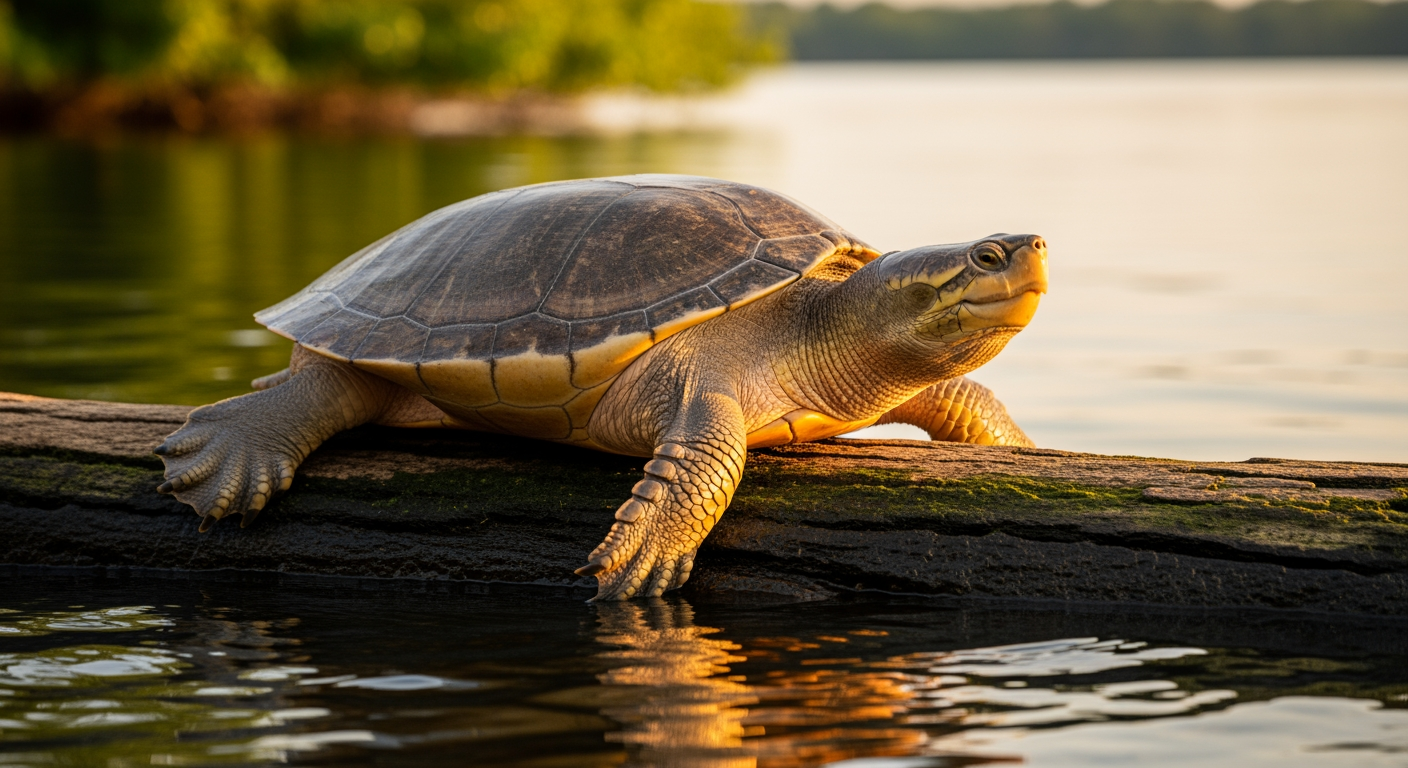
It’s one of the most common questions people ask about turtles, and it’s easy to see why there’s confusion. Turtles swim, many live in ponds and oceans, and they lay their eggs near water — all things we tend to associate with frogs and other amphibians. So the instinct to call a turtle an amphibian is understandable. But the answer is settled science, and once you know what actually separates a reptile from an amphibian, it becomes obvious.
Below, we’ll walk through exactly why a turtle is a reptile, why it isn’t an amphibian (or a mammal, or a lizard), how the classification holds true for sea turtles, tortoises and every other kind, and even where turtles came from in the first place. By the end, you’ll be able to explain it to anyone.
Is a turtle a reptile? The short answer
Yes. A turtle is a reptile. In the system biologists use to organise life, turtles sit in the class Reptilia — the same broad group as snakes, lizards, crocodiles and the tuatara — and within that class they have their own order, Testudines, which covers all turtles, tortoises and terrapins.
That isn’t a loose, everyday label. It’s based on a specific set of physical and biological traits that all reptiles share and all turtles have. A turtle isn’t « sort of » a reptile or merely « related to » reptiles — it is one, in exactly the same way a dog is a mammal. The rest of this guide explains the traits that make it so, because understanding why is what clears up the amphibian confusion for good.
What makes an animal a reptile (and how turtles tick every box)
Reptiles are defined by a handful of shared characteristics. To count as a reptile, an animal generally has to check all of these boxes — and a turtle checks every one.
1. Dry, scaly skin
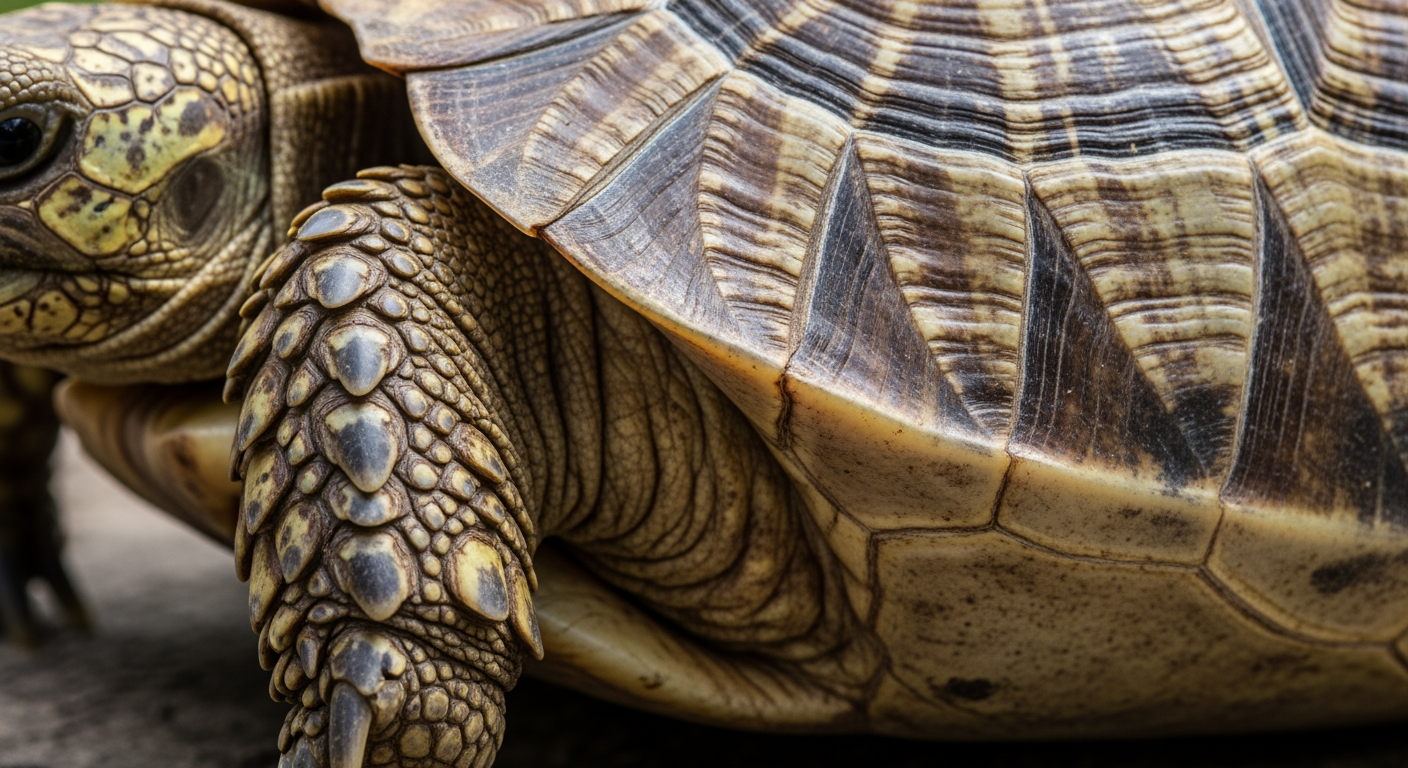
Reptiles are covered in scales made of keratin — the same tough protein in your fingernails. This dry, scaly skin seals moisture in and lets reptiles live away from water. Turtles have scaly skin on their legs, neck and tail, and the hard plates covering a turtle’s shell — called scutes — are themselves made of keratin. That’s a textbook reptile feature, and it’s the single fastest way to tell a turtle apart from a smooth, moist-skinned amphibian. Like other reptiles, turtles even shed: aquatic species slough off old scutes as they grow, sometimes leaving thin, translucent plates drifting in the water.
2. They breathe air with lungs
Every reptile breathes air through lungs for its entire life. This is true even of turtles that spend almost all their time underwater: a sea turtle or a pond turtle has to surface to breathe, because it has lungs, not gills. Amphibians, by contrast, usually start life with gills and breathe partly through their skin. A turtle never has gills at any stage — it is an air-breather from the moment it hatches. Some freshwater turtles can absorb a little extra oxygen through other parts of the body during long dives, but that only tops up the lungs; it never replaces them. A turtle is, and always remains, a lung-breathing reptile.
3. They are cold-blooded (ectothermic)
Reptiles are ectothermic, or « cold-blooded, » meaning they don’t generate much of their own body heat and instead rely on their surroundings to warm up. This is why you so often see turtles basking — lined up on a log or a rock, soaking up the sun. They shuttle between sun, shade and water to keep their temperature in the right range, behaviour that’s classic reptile and something no warm-blooded mammal or bird needs to do. The same reliance on outside warmth explains brumation: in cold months many turtles slow almost to a standstill, tucking into mud or pond bottoms until the temperature climbs again. It’s the reptile version of waiting out winter.
4. They lay amniotic eggs on land
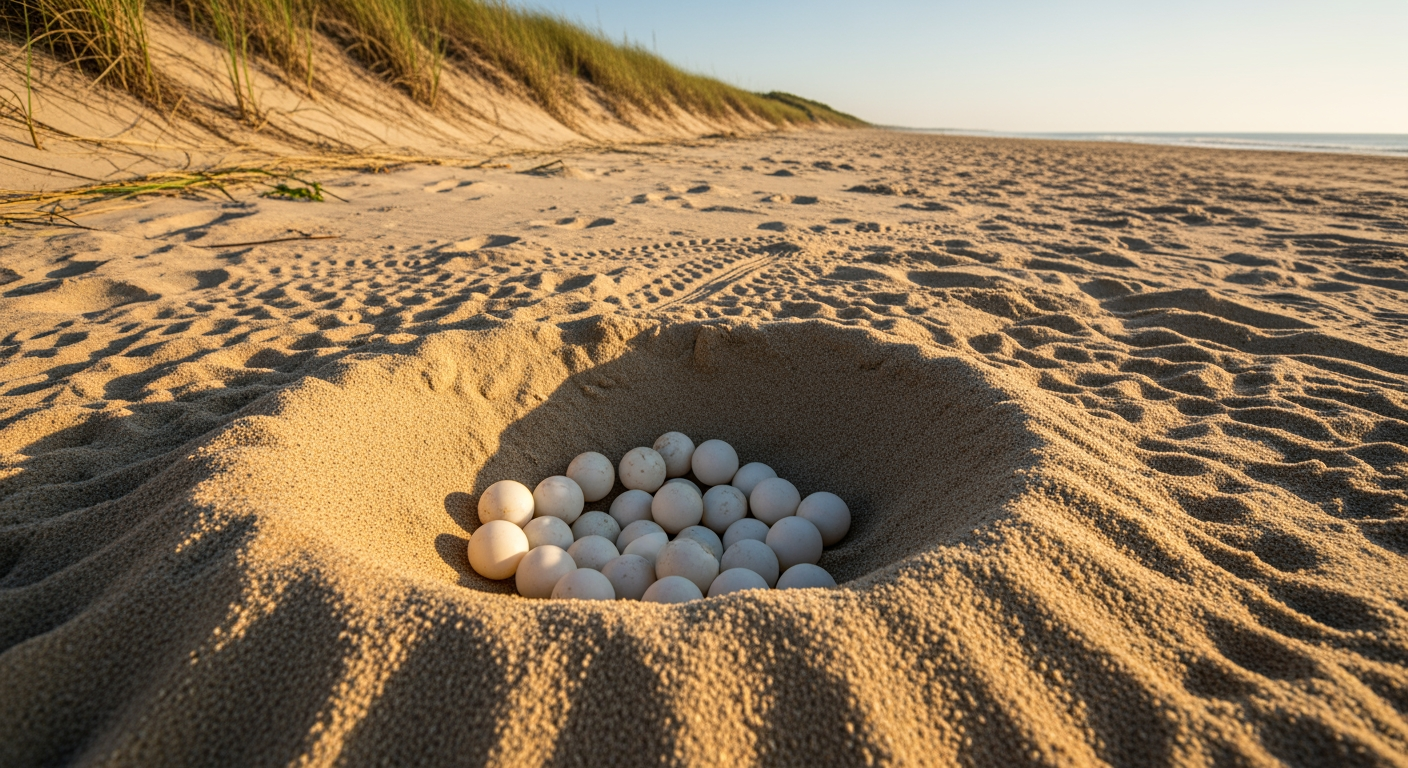
One of the biggest dividing lines in the animal kingdom is the type of egg. Reptiles lay amniotic eggs — eggs with protective membranes and a leathery or hard shell that can survive out of water. Every turtle, without exception, lays its eggs on land. Even sea turtles, which spend their whole lives in the ocean, haul themselves onto a beach to dig a nest and lay leathery eggs in the sand. Amphibians do the opposite: their soft, jelly-like eggs must stay wet, so they’re laid in or right beside water. There’s a further reptilian twist — in most turtles the temperature of the nest, not genetics, decides whether the hatchlings are male or female, the same temperature-dependent system you find in crocodiles and never in mammals.
5. They are vertebrates
Reptiles are vertebrates — animals with a backbone. A turtle absolutely has one; in fact, its backbone and ribs are fused directly into the upper shell, which is part of why a turtle can never crawl out of its shell. So yes, a turtle has a spine, and it sits firmly in the vertebrate camp alongside all other reptiles, birds, fish and mammals.
Put those five traits together — scaly skin, lungs, cold-blooded, land-laid amniotic eggs, and a backbone — and you have the working definition of a reptile. A turtle has all five. There’s simply no trait of a reptile that a turtle is missing.
Reptile or amphibian? Why so many people get it wrong
So, is a turtle a reptile or amphibian? A turtle is a reptile — every time. But it’s such a common question that it’s worth seeing exactly why, and why an amphibian is something quite different.
This is the heart of the confusion, so it’s worth tackling head-on. The reason people wonder whether a turtle is a reptile or an amphibian comes down to lifestyle: many turtles live in water and are strong swimmers, and frogs and salamanders — the animals most people picture when they hear « amphibian » — also live in and around water. Some salamanders even have a low, long-bodied look that, at a glance, isn’t a million miles from a lizard. If you judge by habitat or first impressions alone, it’s an easy mistake. But neither one defines these groups; biology does. And on every biological measure, a turtle lands squarely on the reptile side.
| Trait | Reptiles (incl. turtles) | Amphibians (frogs, salamanders) |
|---|---|---|
| Skin | Dry, scaly, keratin scutes | Moist, smooth, permeable |
| Eggs | Leathery, laid on land | Jelly-like, laid in water |
| Young | Hatch as miniature adults | Larvae (e.g. tadpoles), then metamorphosis |
| Breathing | Lungs (air) for life | Gills when young, then lungs and skin |
| Water | Can live fully away from water | Tied to water to breed and survive |
To be fair about why the mix-up happens, turtles and amphibians genuinely do share a few things: both are cold-blooded, both lay eggs rather than giving birth to live young, and plenty of species in both groups live in or near water. Those overlaps are real — they’re just not the traits that define either group. Look instead at skin, eggs and life cycle, and the two separate cleanly.
The clearest giveaway is the life cycle. Amphibians undergo metamorphosis: a frog begins life as a gilled tadpole living in water, then transforms into an air-breathing adult. A turtle never does anything of the sort. A baby turtle hatches from its egg already looking like a tiny version of its parents — shell, legs, scaly skin and all — and it breathes air from day one. No gills, no tadpole stage, no transformation. That alone rules out « amphibian » entirely.
So whether you ask « is a turtle a reptile or an amphibian? » or flip it around to « is a turtle an amphibian or a reptile? », the science gives the same unambiguous answer: scaly skin, lungs, land-laid eggs and no metamorphosis all point one way. A turtle is a reptile, not an amphibian.
Not a mammal, and not a lizard either
Two other mix-ups come up often enough to be worth clearing up.
Is a turtle a mammal?
No. Mammals have hair or fur, produce milk to feed their young from mammary glands, and are warm-blooded — they generate their own body heat. Most also give birth to live young. A turtle has none of these features: no hair, no milk, no live birth, and it’s cold-blooded rather than warm-blooded. It lays eggs and basks in the sun for warmth. So if you’re weighing up « is a turtle a reptile or a mammal? », the answer is firmly reptile — a turtle is about as far from a mammal as a backboned animal can get.
Is a turtle a lizard?
Also no — though this one is closer, because lizards are reptiles too. The key is that « reptile » is a big group with several branches. Lizards (along with snakes) belong to the order Squamata. Turtles belong to a completely separate order, Testudines. So a turtle and a lizard are both reptiles, in the same way a cat and a dog are both mammals — related, but not the same kind of animal. A turtle is a reptile, but it is not a lizard.
In fact, the living reptiles split into four main groups:
- Testudines — turtles, tortoises and terrapins.
- Squamata — lizards and snakes.
- Crocodilia — crocodiles, alligators and their relatives.
- Rhynchocephalia — the tuatara, a lizard-like reptile found only in New Zealand.
Turtles sit in their own branch, distinct from all the others, but unmistakably inside the reptile family.
Are sea turtles, tortoises, box and snapping turtles all reptiles?
Is a sea turtle a reptile? Yes — a sea turtle is a reptile, and so is every other kind of turtle. Because « turtle » simply refers to members of the order Testudines, the reptile classification applies to the whole group, no matter where a particular species happens to live.
- Sea turtles are reptiles — specifically, marine reptiles. They’ve adapted beautifully to ocean life, but they still breathe air, stay cold-blooded, and crawl onto beaches to lay eggs, exactly as a reptile does.
- Tortoises are reptiles too. A tortoise is just a turtle that lives on land, with sturdy, stumpy legs instead of flippers. Same order, same reptile traits.
- Box turtles, the familiar land-and-pond turtles of North America, are reptiles — semi-terrestrial members of Testudines.
- Snapping turtles, despite their fierce reputation, are ordinary reptiles biologically: freshwater turtles with the same scaly skin, lungs and land-laid eggs as the rest.
- Terrapins — small freshwater turtles such as the diamondback terrapin — are reptiles as well; « terrapin » is just a common name for certain turtles, not a separate kind of animal.
- Pet turtles like red-eared sliders and painted turtles are reptiles too, which is exactly why they need a basking spot and a heat lamp in their tank — classic cold-blooded reptile care.
Sea, land or freshwater, the verdict never changes. If it’s a turtle, it’s a reptile. This is also the simplest way to settle the turtle-versus-tortoise-versus-terrapin question: all three are reptiles in the order Testudines. « Tortoise » generally means a turtle that lives on land, « terrapin » a small freshwater one, and « turtle » is the umbrella term — but biologically they’re all the same kind of reptile.
How turtles are classified (the science)
If you want the full scientific picture, here’s where a turtle sits in the tree of life, from the broadest grouping down to its order:
- Kingdom: Animalia (animals)
- Phylum: Chordata (animals with a nerve cord and, in this case, a backbone)
- Class: Reptilia (reptiles)
- Order: Testudines (turtles, tortoises and terrapins)
From there, Testudines branches into the various families and the more than 350 living species of turtle found around the world. Every single one of those species is a reptile — there is no exception hiding in the group. So when someone asks « what kind of animal is a turtle? », the precise answer is: a reptile in the order Testudines. And yes — a turtle is very much an animal, a member of the animal kingdom like every other creature with a backbone.
Where turtles came from — and how long they’ve been reptiles
Turtles aren’t just reptiles; they’re among the oldest reptile lineages still alive. The first recognisable turtles appear in the fossil record more than 200 million years ago, around the dawn of the dinosaurs. One of the earliest, Odontochelys, lived about 220 million years ago and is a remarkable halfway figure: it had only a partial shell — the belly plate, or plastron — and, unlike any turtle alive today, it still had teeth in its jaws. Later turtles lost the teeth, completed the shell, and settled into the body plan we’d recognise in an instant.
Where turtles fit inside the reptile family was, for a long time, a genuine scientific puzzle. Because turtle skulls lack the openings found in most other reptiles, scientists once filed them away as the most « primitive » reptiles, only distantly related to the rest. Modern DNA evidence rewrote that story: genetic studies now place turtles much closer to the archosaurs — the group that includes crocodiles, dinosaurs and birds — than to lizards and snakes. In evolutionary terms, the turtle in your garden is a closer cousin of a crocodile than of a gecko.
None of this changes the headline. However you draw the family tree, turtles come out as reptiles — and remarkably durable ones. That fused-shell, scaly-skinned, land-nesting design has barely changed in over 200 million years, for the simple reason that it works.
Common misconceptions about turtles
The reptile-or-amphibian mix-up is the most common, but a few others come up just as often:
- « Turtles are amphibians because they live in water. » Habitat doesn’t decide the group. Sea snakes and marine iguanas live in the ocean and are still reptiles; turtles are no different.
- « A turtle can leave its shell. » It can’t. The shell is built from the turtle’s own fused ribs and backbone, so it’s part of the skeleton — not a removable house it climbs out of.
- « Turtles and tortoises are different kinds of animal. » A tortoise is simply a turtle that lives on land. Both are reptiles in the order Testudines.
- « Turtles are slow and helpless. » On land, many are slow — but sea turtles can swim in short bursts of around 20 mph, and a snapping turtle’s strike is anything but sluggish.
Strip away the myths and the picture stays consistent: a turtle is a sun-basking, air-breathing, egg-laying reptile, however and wherever it happens to live.
Why it matters that a turtle is a reptile
This isn’t just trivia. Knowing that a turtle is a reptile tells you almost everything about how it lives — and, if you keep one, how to care for it.
Because turtles are cold-blooded, they can’t warm themselves from the inside the way we do. A pet turtle needs a basking spot under a heat lamp and a cooler area to retreat to, so it can regulate its own temperature exactly as it would shuttling between a sunny log and shady water in the wild. Most also need UVB lighting, which lets them produce vitamin D3 and absorb the calcium that keeps their shell and bones strong — skip it and a captive turtle can develop serious shell problems. They’re air-breathers, too, so an aquatic turtle’s tank always needs a dry platform to haul out on. And in winter, a turtle’s instinct to brumate is reptile behaviour, not illness.
None of that would make sense if a turtle were an amphibian or a fish. It makes complete sense once you see it for what it is: a reptile, with reptile needs. On a bigger scale, recognising turtles as some of the planet’s oldest reptiles is part of why their conservation matters so much — many species, sea turtles especially, are now threatened, and protecting them means protecting a line of reptiles that has survived for more than 200 million years.
Key takeaways
- A turtle is a reptile (class Reptilia, order Testudines) — not an amphibian, a mammal or a lizard.
- It qualifies on every reptile trait: scaly skin, lungs, cold-blooded, land-laid amniotic eggs, and a backbone.
- It isn’t an amphibian because it has dry scales, breathes air for life, lays eggs on land, and skips the tadpole-style metamorphosis.
- The rule holds for every turtle — sea turtles, tortoises, box, snapping, terrapins and pet sliders alike.
- DNA places turtles closest to crocodiles and birds, in a lineage more than 200 million years old.
Frequently asked questions
Is a turtle an amphibian?
No. Despite living in and around water, a turtle is a reptile, not an amphibian. It has dry scaly skin, breathes air with lungs its whole life, lays eggs on land and never goes through a tadpole-like larval stage — all of which separate it from amphibians like frogs and salamanders.
Why do people think turtles are amphibians?
Mainly because many turtles live in water and swim well, just like frogs. But habitat doesn’t decide the group — biology does. By every biological measure (skin, eggs, breathing, life cycle), a turtle is a reptile.
Is a turtle a mammal or a reptile?
A reptile. Turtles lack the defining mammal traits — no hair or fur, no milk, no live birth — and they’re cold-blooded rather than warm-blooded.
Are turtles cold-blooded?
Yes. Turtles are ectothermic, meaning they rely on their environment for warmth, which is why they bask in the sun. It’s one of the traits that confirms they’re reptiles.
Do turtles have a backbone?
Yes. Turtles are vertebrates, and their backbone and ribs are actually fused into the upper part of the shell — which is why a turtle can’t leave its shell.
What class and order does a turtle belong to?
Turtles are in the class Reptilia and the order Testudines, the group that also includes tortoises and terrapins.
Are turtles lizards?
No. Both are reptiles, but lizards belong to the order Squamata while turtles belong to Testudines — two separate branches of the reptile family.
Is a turtle an animal?
Yes. A turtle is an animal — a member of the animal kingdom (Animalia) — and, more specifically, a reptile in the order Testudines.
Is a turtle considered a reptile?
Yes. A turtle is considered a reptile by biologists: it sits in the class Reptilia and the order Testudines, and it has every defining reptile trait — scaly skin, lungs, cold-blooded metabolism and land-laid eggs.
Why is a turtle a reptile and not an amphibian?
Because it has the reptile traits an amphibian lacks: dry, scaly skin, air-breathing lungs for life, and leathery eggs laid on land — with no gilled tadpole stage or metamorphosis.
Is a box turtle a reptile?
Yes. A box turtle is a reptile — a semi-terrestrial member of the turtle order, Testudines — with the same scaly skin and land-laid eggs as every other turtle.
Is a snapping turtle a reptile?
Yes. Despite its fierce reputation, a snapping turtle is an ordinary reptile: a freshwater turtle in the order Testudines.
Are turtles more closely related to crocodiles or lizards?
Surprisingly, crocodiles. DNA studies place turtles near the archosaurs (crocodiles, dinosaurs and birds), making them more distant relatives of lizards and snakes.
Keep exploring
- More turtle facts & guides → — lifespans, diet, sea turtles and more
- Sea turtle plush → — our pick of the softest, best-reviewed sea turtles