Do Turtles Have Teeth?
Updated June 2026 · Reviewed for accuracy by the Turtle-Gifts editorial team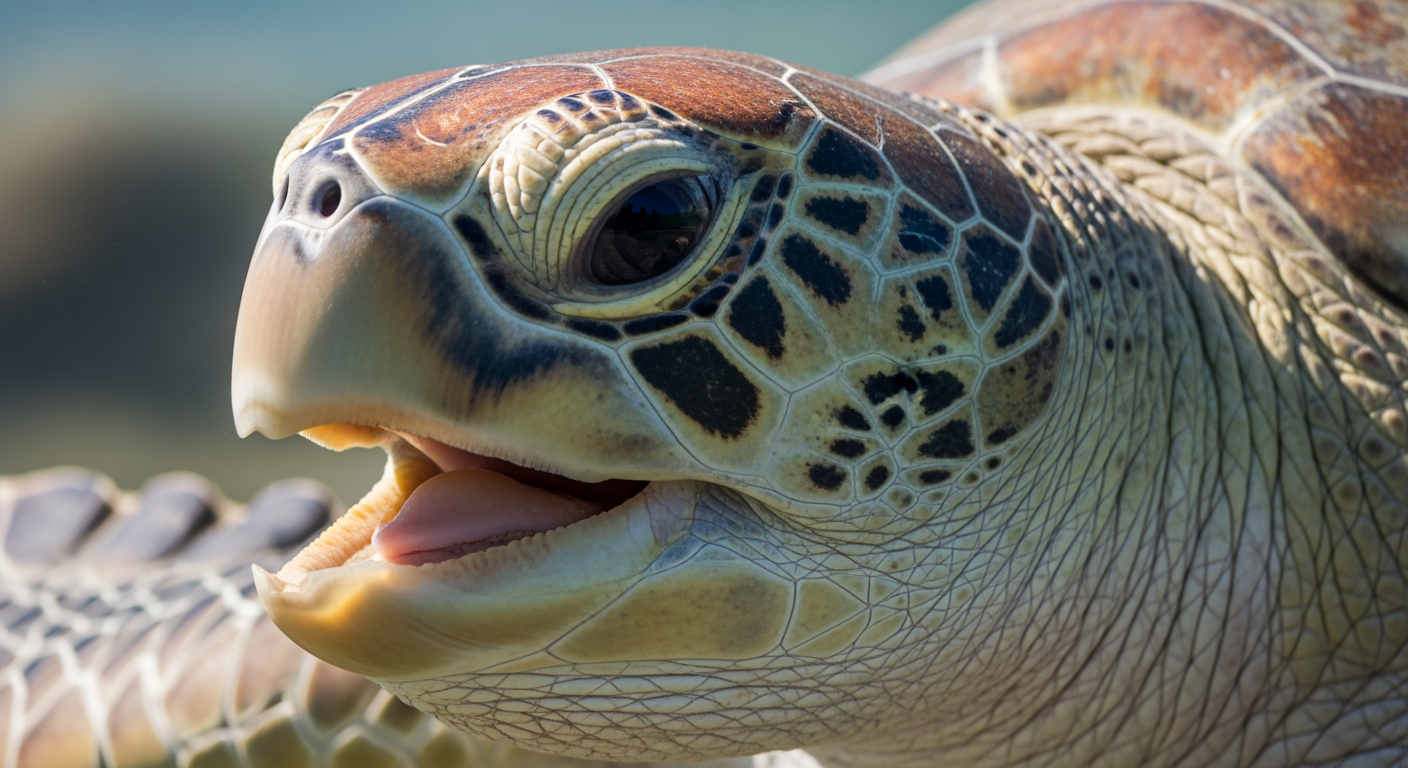
It’s one of those questions that sounds simple but has a genuinely surprising answer. Turtles bite, some of them bite hard, and a few species have mouths that look like they’re crammed with fangs. So it’s natural to assume turtle teeth exist. They don’t — and the real story, from the leatherback’s spine-lined throat to the tiny « egg tooth » a hatchling is born with, is one of the strangest in the animal kingdom. Here’s everything that’s actually going on inside a turtle’s mouth.
Do turtles have teeth? The short answer
No. Does a turtle have teeth? Also no. However you phrase it, the answer is the same: modern turtles are completely toothless. If you opened a turtle’s mouth expecting rows of turtle teeth, you’d instead find a firm, beak-like structure — smooth or sharply ridged depending on the species, but never a single true tooth.
This sets turtles apart from most other reptiles. Crocodiles bristle with teeth, and lizards and snakes have them too. Turtles took a completely different path: they swapped teeth for a beak, much like birds did. In fact, a turtle’s beak and a bird’s beak solve the same problem in much the same way — which is why a turtle’s mouth can look so unexpectedly bird-like once you know to look for it.
What do turtles have instead of teeth?
Instead of teeth, every turtle has a beak — a hard sheath of keratin (the same material as your fingernails and a turtle’s shell scutes) that covers the bony jaws. The technical name for it is the rhamphotheca, and the sharp cutting edges along it are called the tomium. So yes, turtles have a beak: do turtles have beaks? Absolutely — it’s their single most important feeding tool.
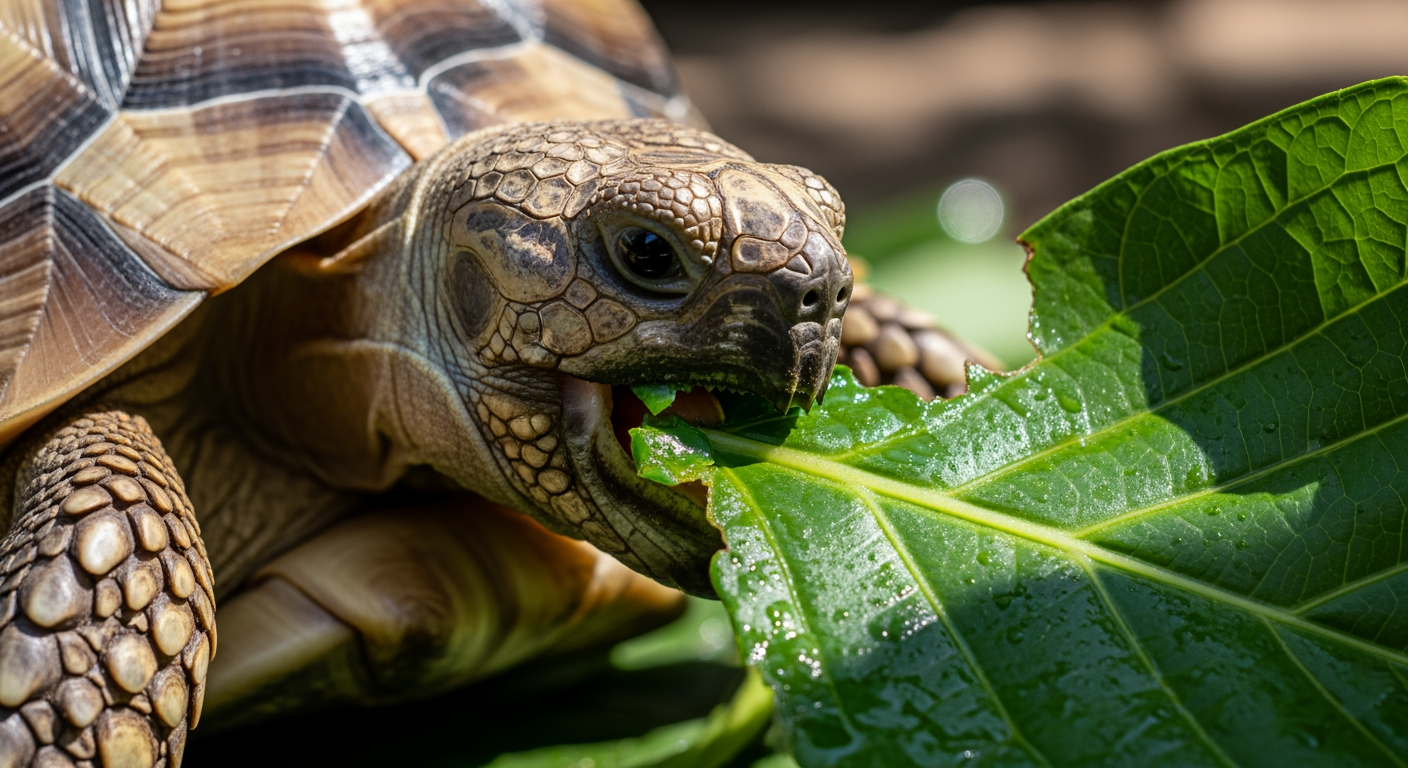
The beak grows continuously throughout a turtle’s life and is constantly worn down by eating, so it stays sharp — a self-maintaining tool. Its exact shape depends on diet:
- Meat-eaters tend to have a hooked, pointed beak for gripping and tearing prey.
- Plant-eaters often have a beak with finely serrated, saw-like edges for slicing through tough leaves and stems.
- Generalists fall somewhere in between, with a sturdy beak that can handle both.
Does a turtle have a beak strong enough to do real damage? In larger species, very much so — which is why a turtle’s « bite » can be no joke even without a tooth in sight. If you’ve ever looked closely at a parrot or an eagle, you already know roughly what a turtle’s beak is doing. The resemblance isn’t really a coincidence: it’s two very different animals arriving at the same neat solution — a hard, self-replacing cutting tool that never needs a dentist. The main difference is that a turtle’s beak is usually broader and built for steady shearing rather than a bird’s quick pecking.
Why don’t turtles have teeth?
The short version: they don’t need them. Why do turtles not have teeth when their ancestors did? Over millions of years, turtles evolved a beak that does everything teeth would — gripping, slicing, crushing — but with less to go wrong. A beak has no roots to get infected, doesn’t fall out, and repairs itself as it wears. For an animal that already invested heavily in a heavy bony shell, a lightweight, low-maintenance beak was simply a better design. Evolution kept it, and teeth disappeared.
The « tooth-like » ridges that fool people
Here’s where the confusion comes from. Some turtles — especially plant-eating ones — have jaw edges so finely serrated that they genuinely look like rows of tiny teeth. Search for « turtle with teeth » and you’ll find photos of exactly this: a green sea turtle or a tortoise with a saw-edged beak. But these serrations are part of the beak itself; they’re made of keratin, not the dentine and enamel of a true tooth. So while it can look as though some turtles with teeth exist, what you’re really seeing is a cleverly tooth-shaped beak. Do turtles have sharp teeth? No — they have sharp beak edges that do the same job.
How do turtles bite and eat without teeth?
If a turtle has no teeth, how does it eat? The answer is a powerful turtle jaw plus that sharp beak. Do turtles have jaws? Yes — strong bony ones, worked by thick muscles, that snap the beak shut like shears. A turtle doesn’t chew the way we do; instead it bites off bite-sized pieces with the beak and swallows them more or less whole, letting its digestive system do the rest.
Big-jawed species can bite down with startling force. So how do turtles bite if they have no teeth? The cutting edge of the beak concentrates all that jaw power onto a thin line — exactly like a pair of scissors or secateurs. No teeth required, and in the largest turtles a bite can break skin or worse.
Eating without teeth shapes how turtles feed in other ways, too. Many aquatic turtles have to eat underwater, using a mix of suction and the beak to draw in and snip their food, because they can’t manipulate it on land the way a mammal would. The mata mata of South America takes this to an extreme: it lies still on the riverbed, then opens its huge mouth so fast that the rush of water vacuums an entire fish straight in, to be swallowed whole. And because nothing is chewed, the beak’s only job is to reduce food to swallowable pieces — the real breaking-down happens later, in the gut. It’s a strikingly efficient system for an animal with no teeth to lose.
Do sea turtles have teeth? Inside a sea turtle’s mouth
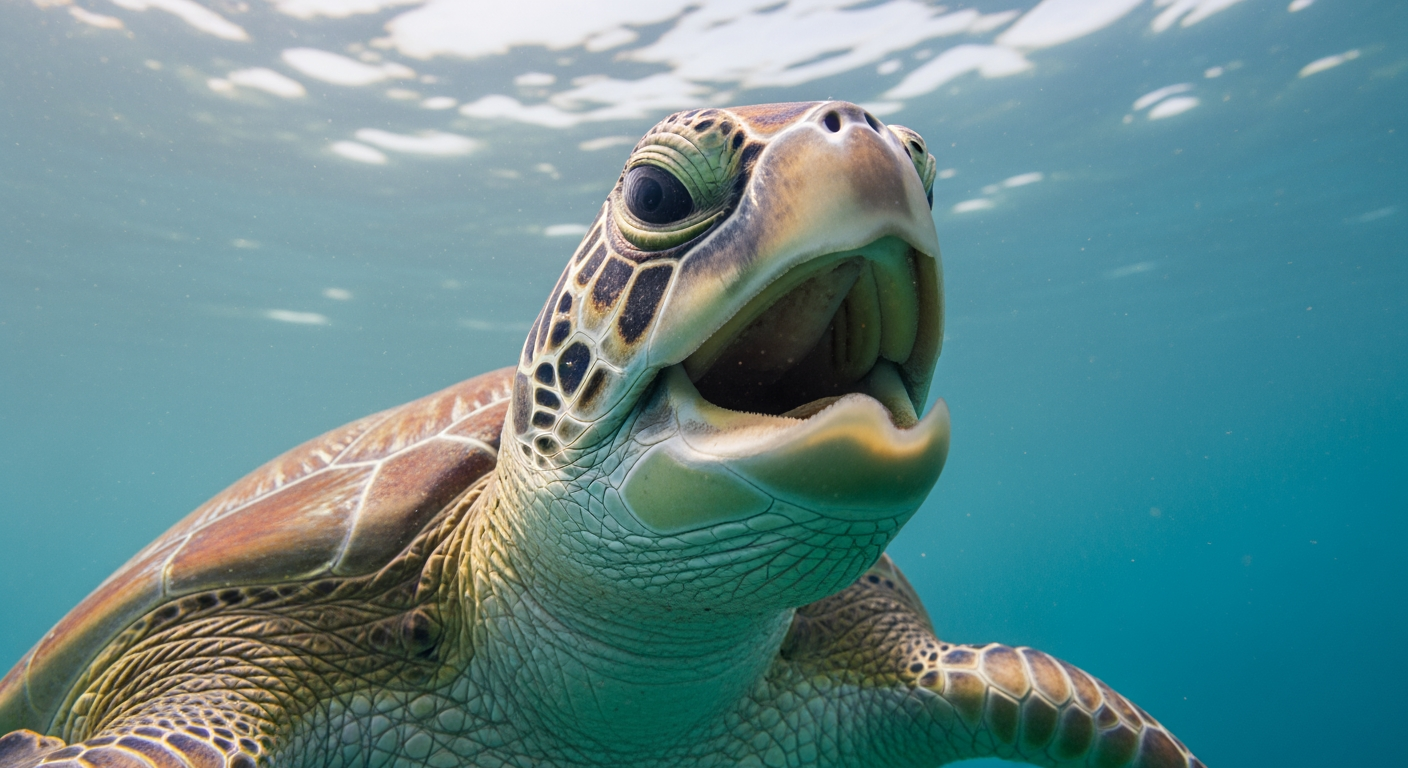
Do sea turtles have teeth? No — like all turtles, sea turtles are toothless and use a beak. But the sea turtle mouth is one of the most jaw-dropping sights in nature, and it’s the reason this question gets asked so often. Peer into a sea turtle’s mouth and you may see what looks like hundreds of sharp, backward-pointing spikes lining the throat. Do all sea turtles have teeth hiding in there? Does a sea turtle have teeth at all? No on both counts — and that’s the twist.
Those spikes are called papillae. They’re soft, flexible projections made of keratin, not teeth, and they point down the throat toward the stomach. Their job is to grip slippery prey — especially jellyfish — so it can’t wriggle back out while the turtle expels the seawater it gulped down with its meal. So if you’ve ever wondered, do turtles have teeth in their throat? — the honest answer is no: not teeth, but a one-way trap of spines. Photos of sea turtles mouths spread across the internet precisely because that throat looks so alarming — yet there’s not a real tooth in sight.
And the tongue? Turtles do have one, but it’s fixed to the floor of the mouth and can’t be poked out like a dog’s. Sea turtles can’t even use theirs to swallow on land — another quirk of a mouth built entirely around the beak rather than teeth.
Sea turtle teeth questions usually trace back to one species in particular. Why do leatherback turtles have so many teeth? They don’t — but the leatherback has the most extreme papillae of all, with its entire mouth and oesophagus lined in long, spike-like projections that make leatherback « teeth » look terrifying in photos. Search « leatherback turtle teeth » or « leatherback sea turtle teeth » and you’ll see them; just remember those leatherback teeth are jellyfish-gripping papillae, not real teeth. Do leatherback turtles have teeth in the true sense? No. Do leatherback sea turtles have teeth of any kind? Also no — and yet a leatherback can swallow a jellyfish far larger than its own head, the papillae ratcheting it down the throat one gulp at a time. There’s a tragic twist to that brilliant design: those same backward spines also trap floating plastic bags, which leatherbacks mistake for jellyfish and cannot spit back out — one of the reasons ocean plastic is so deadly to them.
The rest of the mouth varies by species, which is why the sea turtle mouth can look so different from one turtle to the next. The green sea turtle mouth has a finely serrated, saw-edged beak for cropping seagrass and algae — the classic « turtle open mouth » photo that gets mistaken for a row of teeth. The hawksbill’s narrow, sharply hooked beak lets it pluck sponges from tight reef crevices. The loggerhead’s broad, immensely powerful jaws crush the shells of crabs and conchs. What do sea turtles have instead of teeth, then? A beak suited to their diet, plus — in the jellyfish-eaters — those remarkable throat papillae.
Do snapping turtles have teeth?
Do snapping turtles have teeth? No — and this surprises almost everyone, because a snapping turtle’s bite is famous. But a snapping turtle has no teeth at all; what it has is a large, sharp, powerfully hooked beak and a heavily muscled jaw. People searching « snapping turtle teeth » or wondering « do snapping turtles have canine teeth » are picturing fangs that simply aren’t there.
What makes the bite dangerous is the beak’s hooked tip combined with raw jaw strength. Does a snapping turtle have teeth doing the damage? No — it’s that beak shearing down with real force. The same is true of its larger cousin: do alligator snapping turtles have teeth? No, but their beak is even more formidable, and they fish with a clever trick — wiggling a small, worm-like lure on the floor of the mouth to draw prey straight to the beak. Either way, snapping turtles earn their fearsome reputation entirely without a single tooth. It’s worth adding that the internet wildly exaggerates their bite: a common snapping turtle’s bite force is far below the cartoonish figures shared online, and calm handling plus a bit of distance is really all you need around one.
Do tortoises have teeth? Do they bite?
Do tortoises have teeth? No — a tortoise is just a land-living turtle, so it follows the same rule: no teeth, just a beak. The tortoise beak is sharp and often serrated, perfect for the tough plants most tortoises eat. If you’re looking for tortoise teeth, you’ll only ever find that hard, cutting beak instead.
Do tortoises bite, though? Yes, they can — and a bite from a large tortoise can genuinely hurt. Tortoises may nip if they feel threatened, or simply mistake a finger for food, and that beak has enough edge and force behind it to break skin. Do tortoise have jaws strong enough to matter? In big species, definitely. It’s a good reminder that « no teeth » never means « harmless. »
Does a turtle bite hurt — and is it dangerous?
Given there are no teeth involved, you might expect a turtle bite to be harmless. From a small pet turtle, it usually is — the worst you’ll get is a startling nip. But the beak is sharp and the jaws can be strong, so a bite from a larger turtle is a different matter. A big snapping turtle or a large tortoise can break skin, bruise badly, or in the worst cases seriously injure a finger.
The practical advice is simple. Never dangle fingers in front of a turtle’s face, especially at feeding time, when a hungry turtle may mistake them for food. Support a turtle from the rear of the shell, well away from the head. And give wild snapping turtles a wide berth — their necks reach much further back and faster than people expect. Treat the beak with the same respect you’d give a parrot’s, and bites are easy to avoid. If a turtle does latch on, don’t yank it off — that can make the wound worse; staying calm and gently lowering an aquatic turtle back into the water will usually persuade it to let go.
What about specific turtle species?
The rule is wonderfully consistent. Do all turtles have teeth? No — no living turtle species has teeth. Here’s the quick run-through for the species people most often ask about — the answer is « no » every time, with a beak doing the work instead:
- Do box turtles have teeth? No — a beak with sharp edges for their mixed diet.
- Do painted turtles have teeth? No — a small, neat beak.
- Do red-eared slider turtles have teeth? No — sliders use a beak, though hatchlings can still deliver a surprising nip.
- Do musk turtles have teeth? No, but they have a strong beak and aren’t shy about using it.
- Do softshell turtles have teeth? No — searches for softshell turtle teeth turn up a sharp beak hidden behind fleshy lips, and photos labelled Florida softshell turtle teeth really just show that beak, paired with a surprisingly powerful bite.
- Do loggerhead turtles have teeth? No — just an especially powerful shellfish-crushing beak.
- Do green sea turtles have teeth? No — a finely serrated beak for grazing seagrass.
- Do African sideneck turtles have teeth? No — the same toothless beak as every other turtle.
- Do map and mud turtles have teeth? No — beaks again, sized to their diet of snails, insects and plants.
Whether it swims in the ocean or plods across your garden, the answer never changes: a beak, not teeth.
The egg tooth: the one « tooth » a turtle ever has
There’s a single, charming exception. Do baby turtles have teeth? Almost — a hatchling is born with a tiny, temporary point on the tip of its snout called the caruncle, often nicknamed the turtle egg tooth. The hatchling uses this little hard bump to slit and push its way out of the leathery eggshell from the inside, after weeks of developing in the nest.
But the turtle egg tooth isn’t a real tooth at all — it’s a hardened bit of skin, more like a temporary callus — and within a couple of weeks of hatching it simply drops off and is gone for good. So even the one « tooth » a turtle is born with isn’t truly a tooth, and no turtle ever grows a real one in its place. Birds, lizards, snakes and crocodiles all hatch with the same temporary tool — a neat clue that turtles belong right alongside them as egg-laying reptiles.
Did turtles ever have teeth?
Yes — a long, long time ago. The earliest turtle ancestors did have teeth. Odontochelys, which lived around 220 million years ago, had a mouth full of small teeth alongside its half-formed shell. Over the following millions of years, turtles gradually lost those teeth and evolved the beak instead, so that by the age of the dinosaurs the modern toothless turtle was well on its way. A truly toothless turtle, in other words, is the product of more than 150 million years of evolution. (It’s part of the same deep history that makes turtles such ancient reptiles — more on that in our guide to whether a turtle is a reptile.)
Why lose a perfectly good set of teeth? Biologists think the beak proved better suited to a turtle’s slow, armoured way of life, and that the genetic switch toward a keratin beak quietly shut down the old tooth-building programme. Whatever the trigger, every turtle alive today descends from those toothless pioneers — which is exactly why you’ll never meet a modern turtle with teeth.
How many teeth does a turtle have?
Zero. However you ask it — how many teeth does a turtle have, or how many teeth do turtles have across all the species on Earth — the count is always none. The same goes for the specifics: how many teeth do sea turtles have? None. How many teeth do snapping turtles have? None. How many teeth do leatherback turtles have? Still none. Every turtle, everywhere, has exactly zero teeth and one very capable beak.
Frequently asked questions
Does a turtle have teeth?
No. No living turtle has teeth. Turtles have a hard keratin beak with sharp cutting edges that they use to grip and slice food instead.
Do any turtles have teeth?
No — not one of the world’s turtle species has true teeth. Some have saw-like serrations on the beak that look like teeth, but they’re part of the beak, not real teeth.
Do turtles have a beak?
Yes. Every turtle has a beak made of keratin covering its jaws. It grows continuously, stays sharp through use, and does the job teeth would in other animals.
How do turtles eat without teeth?
They use the sharp edge of the beak, powered by strong jaw muscles, to bite off pieces of food and swallow them whole. There’s no chewing — the beak and digestive system do the work.
Do sea turtles have teeth in their throat?
No. The spike-like projections lining a sea turtle’s throat are keratin papillae, not teeth. They point backward to trap jellyfish and other slippery prey so it can’t escape.
Do snapping turtles have teeth?
No. A snapping turtle’s powerful bite comes from a sharp, hooked beak and strong jaws — not teeth or canines.
Do tortoises bite?
Yes. Tortoises have no teeth, but their sharp beak can deliver a real bite if they feel threatened or mistake a finger for food.
Do baby turtles have teeth?
Not really. Hatchlings have a temporary point called an egg tooth (caruncle) to break out of the shell, but it’s hardened skin, not a true tooth, and it falls off soon after hatching.
How many teeth does a turtle have?
None. Every turtle species has zero teeth. They rely entirely on a keratin beak instead.
Keep exploring
- More turtle facts & guides → — anatomy, diet, lifespan and more
- Is a turtle a reptile? → — the surprisingly nuanced answer
- Sea turtle plush → — our pick of the softest, best-reviewed sea turtles